
In the aluminium profile industry, 6061 and 6063 are the two most commonly used aluminium alloy materials. I often come across many buyers when they are choosing materials, they are often confused about which material they should use to produce their products to achieve the best results. As an experienced person who has worked in the aluminium profile1 industry for more than ten years, I know very well the difference between them, and I also know what products should be made of which material will be more suitable. Today, I’m going to give you a detailed analysis of the characteristics and applicable scenarios of these two types of aluminium alloys, in the hope that you can be more accurate when choosing aluminium profiles in the future.
1.Difference between 6061 Aluminium and 6063 Aluminium
1). Composition and mechanical properties
-
6061 Aluminium2: The composition of this alloy contains more magnesium (0.8%-1.2%) and silicon (0.4%-0.8%), as well as a small amount of copper (0.15%-0.4%) and chromium (0.04%-0.35%). As a result, it has high strength and hardness, with a typical tensile strength that can reach around 290 MPa (MPa) and a yield strength of around 240 MPa. 6061 aluminium is much stronger, and is more suitable for structural products that need to withstand larger loads or strength requirements.
-
6063 Aluminium3: In comparison, 6063 has a lower magnesium content (0.45%-0.9%) and silicon content (0.2%-0.6%), so it has lower mechanical strength. The tensile strength is about 210 MPa and the yield strength is about 170 MPa. However, it has very excellent extrudability and can make products with complex shapes and smooth surfaces. Therefore, 6063 is more suitable for products that do not require high strength, but require high appearance and surface quality.
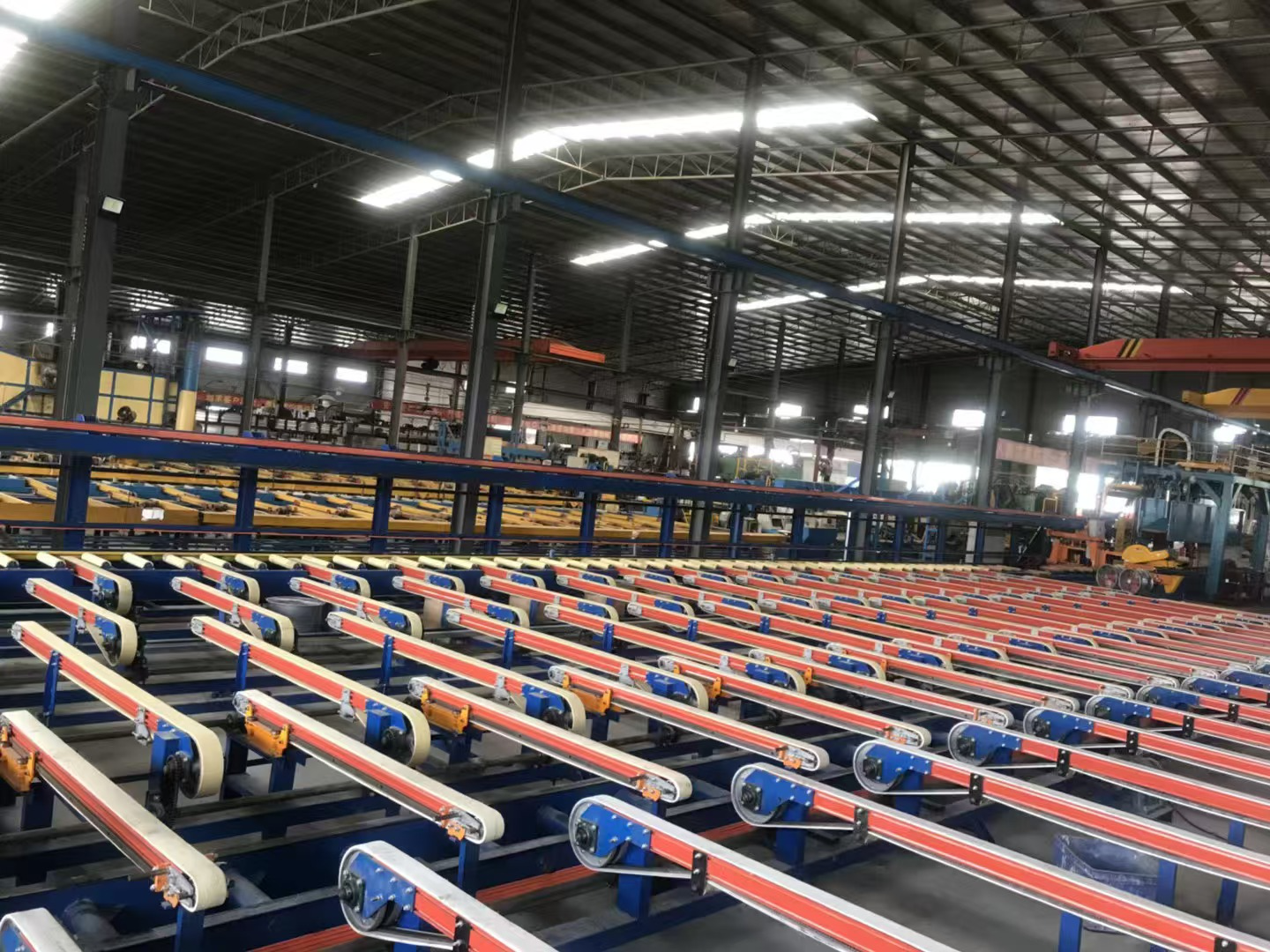
Aluminum extrusion line
The compositional differences between 6063 aluminium alloy and 6061 aluminium alloy are shown in the table below:1
| Element | 6063 Aluminium Alloy | 6061 Aluminium Alloy |
|---|---|---|
| Silicon | 0.4% | – |
| Magnesium | 0.7% | 1.0% |
| Manganese | ≤0.1% | 0.6% |
| Copper | – | 0.25% |
| Chromium | ≤0.1% | 0.09% |
| Zinc | ≤0.1% | ≤0.1% |
| Titanium | ≤0.1% | – |
Note: Some values indicate maximum allowable limits (e.g., ≤0.1%). .
2). Extrudability and Surface Finishing2
-
6061 Aluminium: although 6061 can also be formed through the extrusion process, it will be slightly more difficult to extrude than 6063 because of its higher strength. Also, due to the higher copper content, the surface treatment effect (e.g. anodising) of 6061 is often not as good as 6063, and the surface may not be smooth enough.
-
Aluminium 6063: This is one of the most common aluminium alloys used in the construction industry, and is also known as a ‘building alloy’. Its extrudability is very good, and it can be processed into a variety of complex shapes of aluminium profiles, and the surface treatment has a high degree of finish, which is very suitable for windows, door frames, curtain walls, and other construction products that require a beautiful surface.
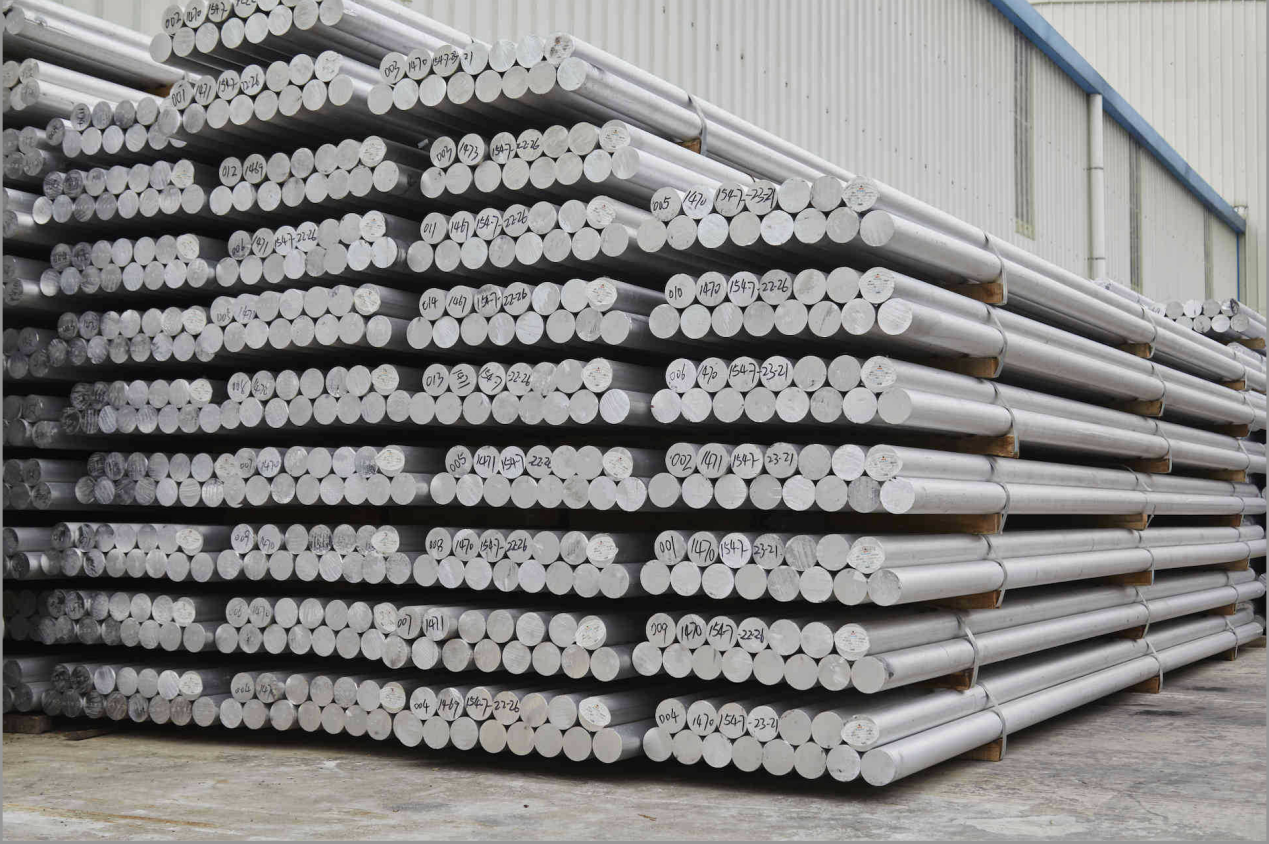
Aluminum bar
6061 Aluminum profiles are more suitable for oxidized surface treatment.False
Because of the high content of copper, the surface oxidation treatment will not be smooth enough.
3). Corrosion resistance
-
6061 Aluminium: Due to the small amount of copper contained, 6061 is more prone to corrosion than 6063 in some specific corrosive environments (such as salt water or humid environments). However, in general use environments, 6061 still has good corrosion resistance.
-
6063 Aluminium: Due to the very low copper content, 6063 has superior corrosion resistance, especially in the external exposure environment, the surface oxide film is more uniform and dense, so it is not easy to rust or corrosion spots in long-term use.
4). Application areas3
-
Aluminium 6061: Due to its high strength and hardness, 6061 is usually used for structural products, such as aeronautical parts, automotive components, bicycle frames, heavy trucks, ships and various mechanical components. These products need to withstand large loads or impacts, so choosing 6061 can provide better structural support.
-
6063 Aluminium: 6063, on the other hand, is widely used in the construction sector, such as window frames, door frames, curtain wall profiles, decorative materials, radiators, railings, and home décor. These products have relatively low requirements for strength, but high requirements for surface finish and aesthetics, so the extrusion performance and surface treatment advantages of 6063 are given full play.
Aluminium 6063 is more resistant to corrosion than aluminium 6061.True
Due to the 6061 very low copper content ,the surface oxide film is more uniform and dense.
Aluminum 6061:This is one of the most common aluminium alloys used in the construction industry.False
Because 6061 material is more hard, building aluminium profiles needed for the hardness requirements are not high, but the surface gloss requirements are high, so 6063 aluminium is more suitable for building aluminium.
2.How to choose the right aluminium?4
If you are still hesitant about which aluminium alloy you should choose for your product, you can judge based on the following aspects:
-
If the product needs to withstand greater pressure or mechanical loads, such as mechanical parts, frame structures, heavy equipment, etc., it is recommended to choose 6061 aluminium. It is stronger and can ensure the durability and safety of the product.
-
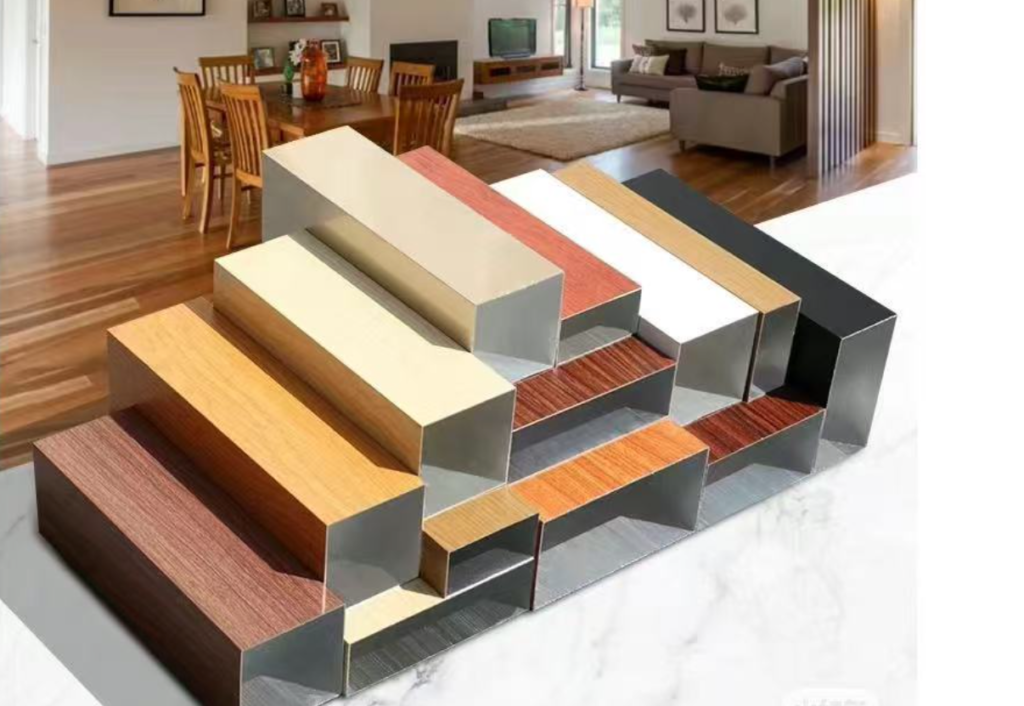
If the product has higher requirements for appearance and surface treatment and lower mechanical properties, such as doors and windows, decorative profiles, radiators, etc., 6063 aluminium is recommended. It has better extrusion properties and can produce products with smooth surfaces and complex shapes.
图片5 3.Summary:
6061 and 6063 are two types of aluminium alloys with distinct applications due to their unique properties. 1).6061 aluminium is known for its high strengh, making it an ideal choice for structural applications that require durability and the ability to withstand substantial loads. This alloy also offers good machinability and corrosion resistance, which are critical for applications in aerospace, automotive, and structural framing.
2).6063 aluminium is better suited for architectural and decorative uses, as it can be extruded into complex shapes with smooth, attractive surfaces. This alloy is often used for window frames, door frames, and other aesthetic applications where appearance is a priority. Its lower strength compared to 6061 is compensated by a superior finish and higher flexibility in shaping, making it a popular choice for designs that emphasize visual appeal over load-bearing capacity.
When selecting between 6061 and 6063, the primary consideration should be the intended use of the product rather than just focusing on strength or surface quality alone. Choosing the right alloy for the specific application can enhance product performance while also managing costs effectively. By balancing the requirements for strength, finish, and overall functionality, manufacturers can optimize both performance and budget, ensuring that the end product meets all desired specifications efficiently.
Through the above analysis, you should now have a clearer understanding of how to choose between 6061 and 6063 aluminium. When selecting aluminium profiles in the future, remember these key points to ensure you choose the material that best complements your product’s needs, ultimately adding value to the final outcome!